2 Kerslake St, 5268 Bordertown SA

0409 676 013

About Me

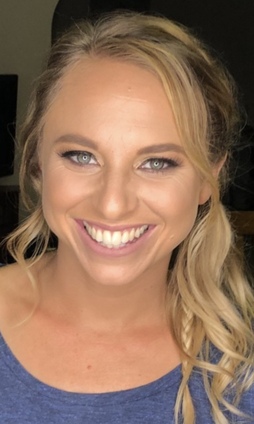
HI, I'M ALYCE


I am the founder of Ridgy Didge Speech Pathology. 


I am a passionate paediatric Speech Pathologist who began her career in 2012 after completing a Masters in Speech Pathology Studies at the University of Queensland. 


Since graduating, I have worked within the public education setting across rural and metropolitan South Australia specialising in preschool and school aged speech, language, and literacy skill development.


Within the Department for Education, I have worked within leadership and buy-in roles working within partnerships, preschools, primary schools, high schools, and the inclusive education support panel. I am a strong advocate for inclusive education and embedding the Multi-Tiered Systems of Support (MTSS) framework into schools and preschools to support every child achieving within the areas of literacy and numeracy.


I am now a mother and looking to establish a work-life balance in my hometown of Bordertown SA, establishing Ridgy Didge Speech Pathology. My private practice continues to focus on my strong professional interest, passion and experience in building capacity of educators, families and the community to build strong communication and literacy skills for children and adolescents to thrive in everyday life!


I am committed to continuous professional growth and development continuing to seek new learning opportunities to better support my clients and community.
Speech

How we say sounds and words

Language

How we use words to share ideas and understand others messages

Literacy

Reading and Writing

Communication

The effective exchange of information through spoken, written and nonverbal means

Our Services

What is Speech?

Speech refers to how we say words, the sound patterns of a language. Speech is the way we pronounce these words, involving the use of the lips, tongue and vocal folds (voice). Words are made up of individual sounds.


When these sounds are spoken incorrectly, it can result in difficulties being understood by your listener. It is normal for young children to make speech errors when they are learning to talk; however, some children continue to have difficulties producing certain sounds. These difficulties can range from delayed errors to unusual (disordered) errors, impacting varyingly on a child’s ability to be understood.


This can further result in frustration, avoidance of words or talking and can impact their literacy development as they enter formal education (e.g., phonological awareness, sentence grammar and phonics development).


Speech assessment and intervention for school-aged students will be inclusive of phonological awareness skills to reduce the impact on literacy development.

What is Language?

Oral language is the information we give and the way we put the information together. It involves words joined together to make sentences and the use of grammar to add meaning to our messages.


Expressive language is the ability to use language and receptive language is the ability to understand language. It includes the form (how words, sentences and sounds are arranged to convey the content), content (everything providing the meaning – words, subject, etc.) and the use (how we use our words to create purpose e.g., to persuade).


Language skills include our vocabulary, grammar and storytelling skills.


In literacy, referring to Scarborough’s Reading Rope, ‘Language’ refers to the ‘Language Comprehension’ strand.

What is Literacy?

Written language is ‘language’ on a page. We need both ‘oral language’ and ‘phonetic’ (decoding/’Word Recognition’) skills in order to develop proficient Literacy skills. The purpose of literacy skills is to be able to read someone else’s written message on a page or to convey our own message through writing on a page.


Literacy skills involves both ‘Language Comprehension’ skills, as well as ‘Word Recognition’ skills which includes phonological awareness, decoding/encoding (phonics), and sight recognition.

These services can range from:

          • An initial consultation
          • Cohort screening
          • Assessment 
          • Individual intervention (including blocks)
          • Group intervention (including blocks) 
          • Screening administration & analysis
          • Skill mapping communication & literacy data
          • Intervention coaching
          • Capacity Building / Workshops / Professional Development


For Children & Adolescents, 

Their Families, 

Pre-schools, Primary Schools, High Schools,

Educators & The Wider Community


Workshops, Training & Professional Development

Educator, parent and community workshops are available and recommended as YOU are the ones communicating with and educating the child/student most of the time in an everyday context!


Workshop prices will be individually quoted dependent on the program type. Many workshops can be adapted to meet the needs of the target audience, as well as to adapt to the time available. Workshops can vary in presentation style, ranging from information presentations, capacity building and coaching, group discussions and joint planning, etc. These can be planned as a series to support ongoing learning and change of practice.


Please contact to discuss and arrange details.


Workshop Topics Availble

Not Exhaustive

Communication

  • Communication skills and development
  • Developmental milestones
  • Promoting early communication development
  • Book reading and conversational reading
  • General strategies for all children / whole class

Speech

  • Speech skills and development
  • Red flags – when to be concerned
  • Delays and disorders – articulation and phonological error patterns
  • Screening and analysis  
  • Intervention
  • Strategies for home and the classroom
  • Impact on literacy

Language

  • Language skills and development
  • Developmental Language Disorder (DLD)
  • Receptive language skills – comprehension
  • Expressive language skills – production
  • Vocabulary skills
  • Grammar skills
  • Narrative skills
  • Book Based Programming
  • Effective questioning
  • Use of visuals
  • Higher order language skills
  • Screening and analysis
  • Interventions
  • Impact on literacy

Literacy

  • Scarborough’s Reading Rope
  • Oral language verse written language skills
  • Fostering early literacy development
  • Emergent literacy skills – School ready
  • Phonological awareness skills
  • Screening tools
  • Interventions
  • Interventions for Adolescents

Specific Education Setting

  • Multi-Tiered Systems of Support (MTSS) framework
  • How to develop this framework in an education setting
  • Screening tools
  • Data analysis
  • Skill Mapping
  • Tiers of intervention
  • Specific interventions (language and literacy)
  • Understanding Students’ with Learning Difficulties – walking in their shoes
  • Language and Literacy Strategies in the classroom – tier 1
  • Joint curriculum planning for language and literacy skill development

Our Fees & Rebates

All new referrals with receive an initial phone consultation with Alyce to see if Ridgy Didge Speech Pathology is the right fit!


All assessment and therapy services are charged per hour. The fees for assessment and therapy sessions incorporate face-to-face therapy time and non-contact administration time.


A standard assessment session is 60 minutes; whilst a therapy session is 45 minutes.


If your child requires therapy sessions, the frequency of these will be discussed at the time of assessment.

Ridgy Didge Speech Pathology is based in Bordertown. Travel may be offered as a part of services provision, which will be charged accordingly.


Services such as report writing, program, and/or resource development and liaison with other service providers/professionals will be charged for as required (as per the hourly therapy rate).


Private Health Insurance

Some private health policies entitle you to a rebate for speech pathology services. You are encouraged to discuss eligibility with your insurer. Families will be required to pay the full session fee and then seek the rebate from their private health fund.


Medicare

A child can receive a referral for a Chronic Disease Management Plan from their GP. This will allow access to 5 allied health sessions within a calendar year at a rebated rate. Families will be required to pay the full session fee first and then seek the rebate back from Medicare.


National Disability Insurance Scheme (NDIS)

The NDIS is a government-funded disability support program. Ridgy Didge Speech Pathology can provide services to NDIS participants if they are self-managed or plan-managed.


Ridgy Didge Speech Pathology Privacy Policy

Alyce Ridgway

Senior Speech Pathologist

BAppSc, MSpPathSt - CPSP